
These tips to buy a leather jacket will help you invest wisely. Buying a luxury leather jacket in India is one of the most rewarding investments you can make in your wardrobe — but only if you know exactly what to look for. The Indian market is flooded with options that range from genuine heirloom-quality pieces to overpriced imitations dressed up in marketing language. This guide cuts through the noise and gives you a clear, expert framework to evaluate every jacket before you spend a single rupee.
Before you buy, here’s what separates a great jacket from a great-looking disappointment:
- The leather grade (full-grain vs. top-grain vs. genuine leather)
- The tanning method (vegetable-tanned leather lasts decades longer)
- The fit across shoulders, chest, and sleeve length
- The lining quality and breathability for Indian weather
- The hardware — zippers, snaps, and buckles must be solid metal
- The stitching — double-stitched seams indicate durability
- The finish — edges should be burnished, not raw or frayed
Contents
Top Tips to Buy a Leather Jacket: Why Fit Is the First Thing Every Buyer Must Get Right
A luxury leather jacket that doesn’t fit is just an expensive mistake. Unlike fabric jackets that can be tailored easily, leather alterations are complex and costly. Getting your fit right from the start is non-negotiable.
1. Shoulder Fit — The Foundation of Every Leather Jacket
The shoulder seam must sit exactly at the edge of your shoulder — not drooping down your arm, not pulling inward. This single measurement defines the entire silhouette of the jacket. When trying on or ordering, measure from the base of your neck to the tip of your shoulder and match it precisely to the jacket’s shoulder width specification.
🛡️ The Bulani Promise: Every Bulani jacket is cut to measure — not sized to approximate. Your shoulder fit is built in before a single stitch is placed.
2. Chest and Torso — Room to Move, Not to Swim
A well-fitted leather jacket should allow you to button or zip it closed with slight resistance — not pull across the chest, and not hang like a bag. The torso should follow your body’s natural shape. For Indians, this often means requesting a slimmer cut than standard Western sizing provides.
🛡️ The Bulani Promise: Bulani jackets are designed around Indian body proportions — so you get European craftsmanship with a fit that actually works for you.
3. Sleeve Length — The Detail That Defines Sophistication
Your jacket sleeve should end at your wrist bone, revealing about half an inch of your shirt cuff. Too long and you look swamped. Too short and the jacket feels cheap. Sleeve length is one of the easiest things to overlook online — always check the spec sheet or ask the brand directly.
🛡️ The Bulani Promise: We publish exact sleeve measurements for every jacket and offer adjustments before production begins.
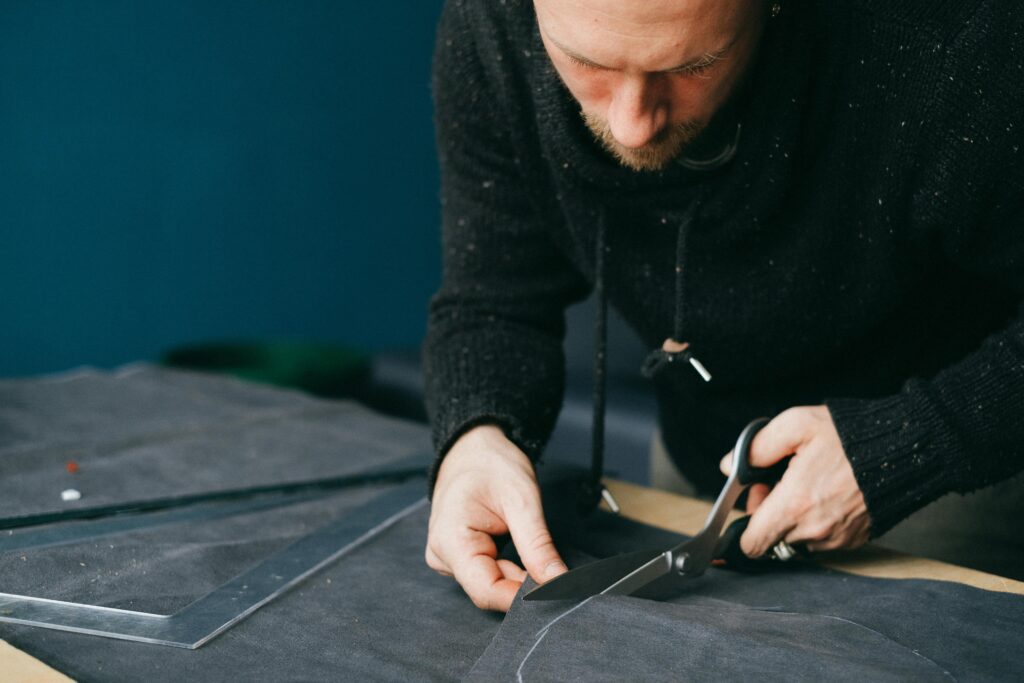
How to Evaluate Leather Quality Like a Pro
When shopping for a luxury leather jacket in India, understanding leather quality is the single most important skill you can develop. Most buyers focus only on looks — experts focus on the hide itself.
4. Full-Grain Leather — The Only Grade Worth Calling Luxury
Full-grain leather retains the entire natural surface of the hide — pores, grain patterns, and all. It is the strongest, most breathable, and most beautiful leather available. It develops a patina over time that makes each jacket uniquely yours. If a brand calls their jacket “luxury” but can’t confirm it’s full-grain, walk away.
🛡️ The Bulani Promise: Bulani uses only full-grain leather — sourced, inspected, and verified. We never use corrected-grain or bonded leather in any of our jackets.
5. The Tanning Method — Why Vegetable-Tanned Leather Changes Everything
Most leather on the market is chrome-tanned — fast, cheap, and uniform. Vegetable-tanned leather takes weeks longer and costs significantly more to produce, but it results in leather that is firmer, more durable, and ages in a way chrome-tanned leather simply cannot. For a luxury jacket meant to last 20+ years, tanning method matters enormously.
🛡️ The Bulani Promise: Our jackets are built on vegetable-tanned hides for buyers who want leather that gets better with every year of wear.

Construction Details That Separate Real Luxury From Imitation
The difference between a ₹8,000 jacket and a ₹35,000 luxury leather jacket in India is not just the leather — it’s everything that holds it together.
6. Hardware, Lining, and Edge Finishing — Where Cheap Jackets Cut Corners
The zipper on a luxury leather jacket should be YKK or equivalent — heavy, smooth, and solid. The lining should be full and breathable (viscose or silk, not cheap polyester). Edge finishing is where most budget jackets fail: raw, unfinished leather edges crack within a year. Look for hand-burnished or painted edges on every panel.
🛡️ The Bulani Promise: From YKK zippers to burnished edges and full viscose linings — every Bulani jacket is finished the way it should be, not the way that saves money.
7. Price vs. Value — What a Luxury Leather Jacket Should Cost in India
In India, a genuine full-grain leather jacket made with quality hardware and construction should cost between ₹15,000 and ₹50,000+. Anything below ₹10,000 calling itself “luxury” is using corrected-grain or bonded leather. Anything above ₹50,000 from a foreign brand is largely paying for the logo. The best value in the Indian market sits with domestic artisan brands who use the same raw materials at significantly lower price points.
🛡️ The Bulani Promise: Bulani delivers full-grain, vegetable-tanned luxury at Indian prices — because great leather shouldn’t require an import markup.
Frequently Asked Questions
What is the best type of leather for a jacket in India?
Full-grain cowhide or lambskin are the best choices for a luxury leather jacket in India. Full-grain cowhide is the most durable and develops a beautiful patina over time. Lambskin is softer and lighter — ideal for fitted, fashion-forward silhouettes.
How do I know if a leather jacket is real or fake?
Real leather has an irregular grain pattern, a natural earthy smell, and warms to the touch quickly. Faux leather has a perfectly uniform pattern, a chemical smell, and feels cool and plasticky. Check the edges — real leather edges are fibrous, not smooth and uniform like PU or bonded leather.
Can I wear a leather jacket year-round in India?
Yes — in North India during autumn and winter, and in the evenings year-round in coastal and southern cities. A well-lined leather jacket handles temperatures from 10°C to 25°C comfortably, making it a versatile wardrobe investment for most Indian climates.
How do I maintain a luxury leather jacket in India?
Condition it with a quality leather cream every 3–4 months, store it on a wide hanger, and keep it away from direct sunlight and humidity. Never store it in a plastic bag — leather needs to breathe. For monsoon seasons, stuff the jacket lightly and store in a cloth bag.
Is a Bulani leather jacket worth the investment?
If you want full-grain leather, precise fit built for Indian proportions, and artisan construction at a fair Indian price point — yes. Bulani jackets are built to last decades, not seasons. Every jacket comes with a craftsmanship guarantee and direct artisan support.
A luxury leather jacket in India is not just a purchase — it is a decision about how you want to dress for the next 20 years. Get the fit right, verify the leather grade, check the construction details, and buy from a brand that can answer every question above with confidence. At Bulani, we built our entire process around making that decision easy. Explore our collection at bulani.store and find the jacket that was made for you. These tips to buy a leather jacket will make sure your investment lasts a lifetime.
Want more tips to buy a leather jacket? Read our complete leather care guide on the blog.