
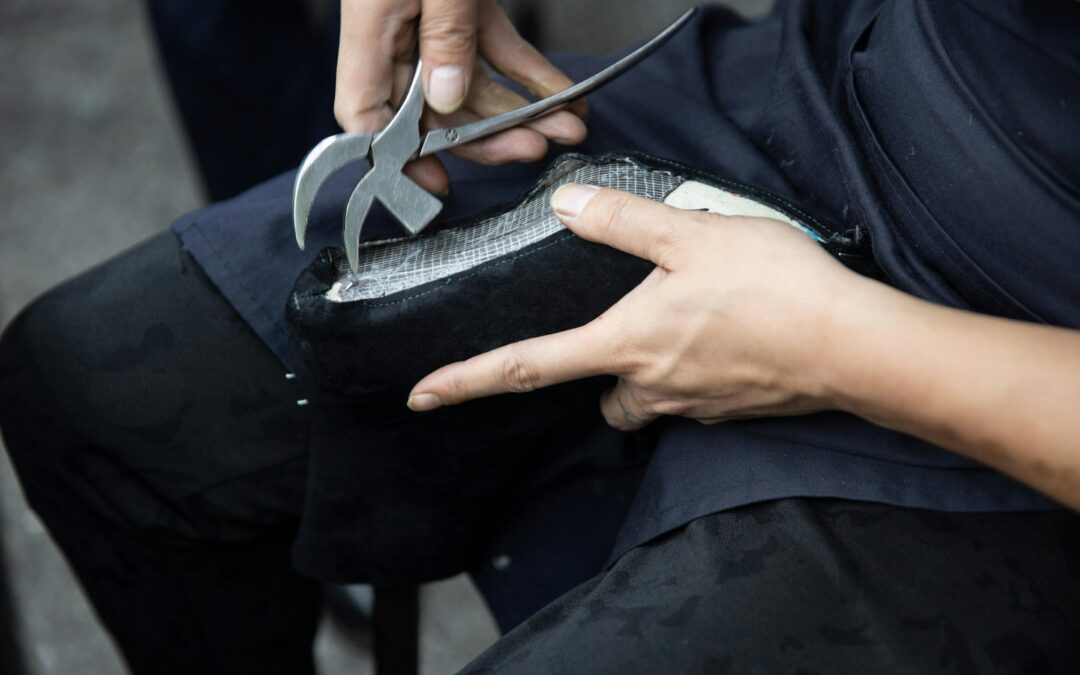
Handcrafted leather has always represented something machines simply cannot replicate — the human touch, the careful eye, and the commitment to slow, intentional craft. In a world flooded with mass-produced goods, handcrafted leather stands apart not just in feel, but in longevity, quality, and soul.
- Saddle stitching that outlasts machine lockstitch by decades
- Hand-selected hides chosen for grain, texture, and character
- Edge finishing that reveals true craftsmanship at a glance
- Natural, breathable leather that moulds to the wearer over time
- Repairs that extend life — not landfill that ends it
- Sustainable, considered production with minimal waste
- A story, a maker, and a purpose behind every piece
Contents
- 1 The Case for Handcrafted Leather — Why Slower Is Always Better
- 1.1 1. The Stitching — Saddle Stitch vs Lockstitch — The Difference That Defines Longevity
- 1.2 2. Hide Selection — Why the Human Eye and Hand Cannot Be Replaced
- 1.3 3. Edge Finishing — The Detail That Reveals Everything About a Piece
- 1.4 4. What Machines Cannot Feel — The Intangible Difference
- 1.5 5. The Cost Argument — And Why It Completely Collapses
- 1.6 6. How to Identify Genuine Handcrafted Leather — 5 Things to Look For
- 1.7 7. Why Slow Craft Matters Beyond the Product
- 2 Frequently Asked Questions
- 2.1 Is handcrafted leather always more expensive than machine-made?
- 2.2 Can you tell the difference between handcrafted and machine-made leather just by looking?
- 2.3 Does handcrafted leather require more care than machine-made?
- 2.4 What is the best type of leather for handcrafted goods?
- 2.5 How long does a truly handcrafted leather piece last?
The Case for Handcrafted Leather — Why Slower Is Always Better
There’s a reason artisan leather goods have endured for centuries while fast fashion trends collapse within seasons. When a craftsperson cuts, stitches, and finishes leather by hand, they’re not just making a product — they’re making a decision. Every cut is intentional. Every stitch is placed with care. The result is a piece that carries that intentionality with it for life.
Machine-made leather goods aren’t bad because machines are bad. They’re inferior because machines cannot make the micro-adjustments a trained hand makes in real time — reading the hide, feeling the resistance of the thread, recognising a weak point before it becomes a flaw. What follows is a breakdown of exactly where and why handcrafted leather beats machine-made in every meaningful category.
1. The Stitching — Saddle Stitch vs Lockstitch — The Difference That Defines Longevity
The stitching on a leather good is not cosmetic. It is structural. It is the thread that holds a wallet together after years of daily use, that keeps a bag strap from splitting under load, that determines whether a shoe survives a decade or a season.
Machine-made leather goods use a lockstitch — two threads interlocked beneath the surface. It’s fast, consistent, and fundamentally fragile. When one thread breaks — and it will — the stitch unravels in both directions. A single broken thread becomes a failed seam.
Handcrafted leather uses the saddle stitch — two needles, two threads, each passing through the same hole from opposite sides. The threads interlock independently at every single stitch point. If one thread breaks, the seam holds. The stitch simply does not unravel. Saddle-stitched seams on well-maintained leather goods have lasted over a hundred years. That is not an exaggeration.
Beyond function, saddle stitching is visually tighter, more even, and more beautiful under close inspection. It is the single most important technical indicator of quality in any leather piece.
The Bulani Promise: Every Bulani piece is saddle-stitched by hand. Not because it’s trendy — because it’s the only way to stitch leather that’s meant to last a lifetime.
2. Hide Selection — Why the Human Eye and Hand Cannot Be Replaced
Leather is a natural material. No two hides are identical. They carry scars, variations in grain, differences in thickness, and zones of varying tensile strength. Selecting the right section of hide for the right part of a product is a skill that takes years to develop — and it is entirely beyond the capability of a machine.
In machine production, hides are fed through automated cutters that optimise for material yield — cutting as many pieces as possible from each skin with minimal waste by the machine’s definition. That means the weakest, most inconsistent sections of the hide end up in finished products. The machine doesn’t know. It doesn’t care.
A skilled leather artisan reads a hide before touching it. They feel for density. They look for natural marks that will add character versus flaws that will cause failure. They select the belly, back, and shoulder sections deliberately, matching each part of the hide to the structural demands of each part of the product. The Leather Working Group — the global authority on leather quality standards — recognises this hand-selection process as a defining mark of premium production.
This is not a minor detail. It directly determines how a piece ages, how it handles stress, and whether it develops the rich patina that makes aged leather beautiful — or the splitting and peeling that makes cheap leather disposable.
The Bulani Promise: Bulani’s artisans personally select every hide. If a section isn’t right, it doesn’t go into a product. That’s a decision no machine will ever make.
3. Edge Finishing — The Detail That Reveals Everything About a Piece
Look at the edges of any leather product. Run your finger along the cut edge of the strap, the border of the wallet, the perimeter of the sole. What you feel and see there tells you everything about how a piece was made and how long it will last.
Machine-made leather goods almost universally leave raw, painted, or folded edges. Raw edges fray and crack. Painted edges chip and peel within months. Folded edges add bulk and hide weakness. These are industrial shortcuts — acceptable by volume production standards, invisible to the untrained eye on the shop floor, but devastatingly obvious after six months of real use.
Handcrafted leather goods are edge-finished by hand. The artisan bevels the edge with a bevelling tool, then uses tokonole or beeswax and a wooden slicker to burnish the fibres flat. The result is a smooth, sealed, rounded edge that will not fray, will not crack, and will actually improve with age as the fibres compress further and develop a subtle sheen. To learn exactly what separates quality from imitation, our guide on how to identify real leather walks through every test in detail.
This process takes time. On a complex piece, it can add hours. But it is the difference between a product that looks better at five years than it did at five weeks — and one that looks broken at six months.
The Bulani Promise: Every Bulani edge is hand-burnished. Every single one. It’s the detail most people never notice — until they handle a piece that doesn’t have it.
4. What Machines Cannot Feel — The Intangible Difference
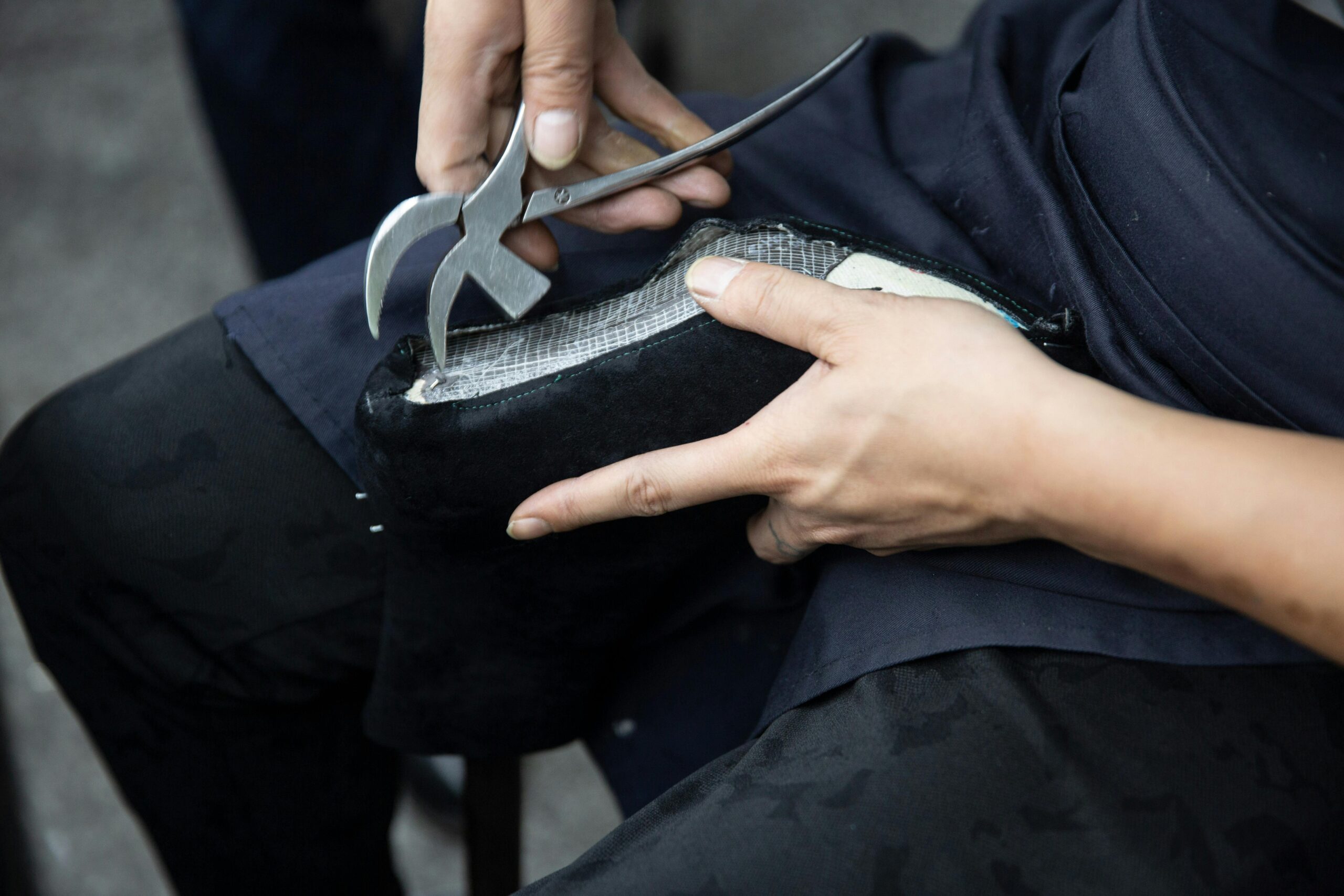
There are aspects of handcrafted leather that cannot be quantified. They exist in the category of craft that separates a maker from an operator — the intuitive adjustments, the learned responses, the accumulated knowledge that a craftsperson carries in their hands after years of work.
A leather artisan feels when the thread is too tight. They know when the hide is slightly damp and will stretch differently as it dries. They sense resistance in the awl that tells them the fibre density has changed and the stitch spacing should adjust. They read the surface of the leather like a language — and they respond.
None of this is programmable. Machine production assumes uniformity — same material, same thickness, same response. Leather never is. It is an organic material with natural variation built into every centimetre. The artisan works with that variation. The machine works against it, or ignores it entirely.
The result in handcrafted pieces is a harmony between maker and material — the product shaped not just to a template but to the specific qualities of the specific hide it was made from. It sounds philosophical. The difference in hand is immediate and unmistakable.
The Bulani Promise: Bulani’s craftspeople are not operators. They are makers. Every piece they produce carries their judgement, their skill, and their hands — and that is irreplaceable.
5. The Cost Argument — And Why It Completely Collapses
The most common defence of machine-made leather is price. And it’s true — a machine-produced wallet costs less upfront than a handcrafted one. That’s the entire extent of the argument, and it collapses the moment you account for time.
A machine-made leather wallet at a low price point typically lasts one to three years before the stitching fails, the edges crack, the lining tears, or the surface delaminates. You replace it. You spend again. Over a decade, you’ve bought five to ten wallets.
A handcrafted vegetable-tanned leather wallet, properly cared for, lasts ten to thirty years. It doesn’t degrade — it improves. The leather darkens, softens, and develops a patina unique to its owner. You buy once. You carry it for life. For the right care routine to protect your investment, read our complete guide on how to care for leather.
The cost-per-year calculation is not close. Handcrafted leather wins decisively on pure economics — before you even factor in the environmental cost of repeated disposal and replacement, or the aesthetic value of owning something that actually gets better with time. Research from the Ellen MacArthur Foundation confirms that longevity-first purchasing is one of the highest-impact choices for reducing material waste.
The Bulani Promise: Bulani prices reflect what things actually cost to make well. We’d rather you buy one piece that lasts decades than five pieces that don’t.
6. How to Identify Genuine Handcrafted Leather — 5 Things to Look For
Not everything marketed as “handcrafted” is. The word has been diluted by brands that apply it to products touched by a human hand at exactly one point in the process. Here’s how to distinguish genuine handcrafted leather from machine-made goods with good marketing.
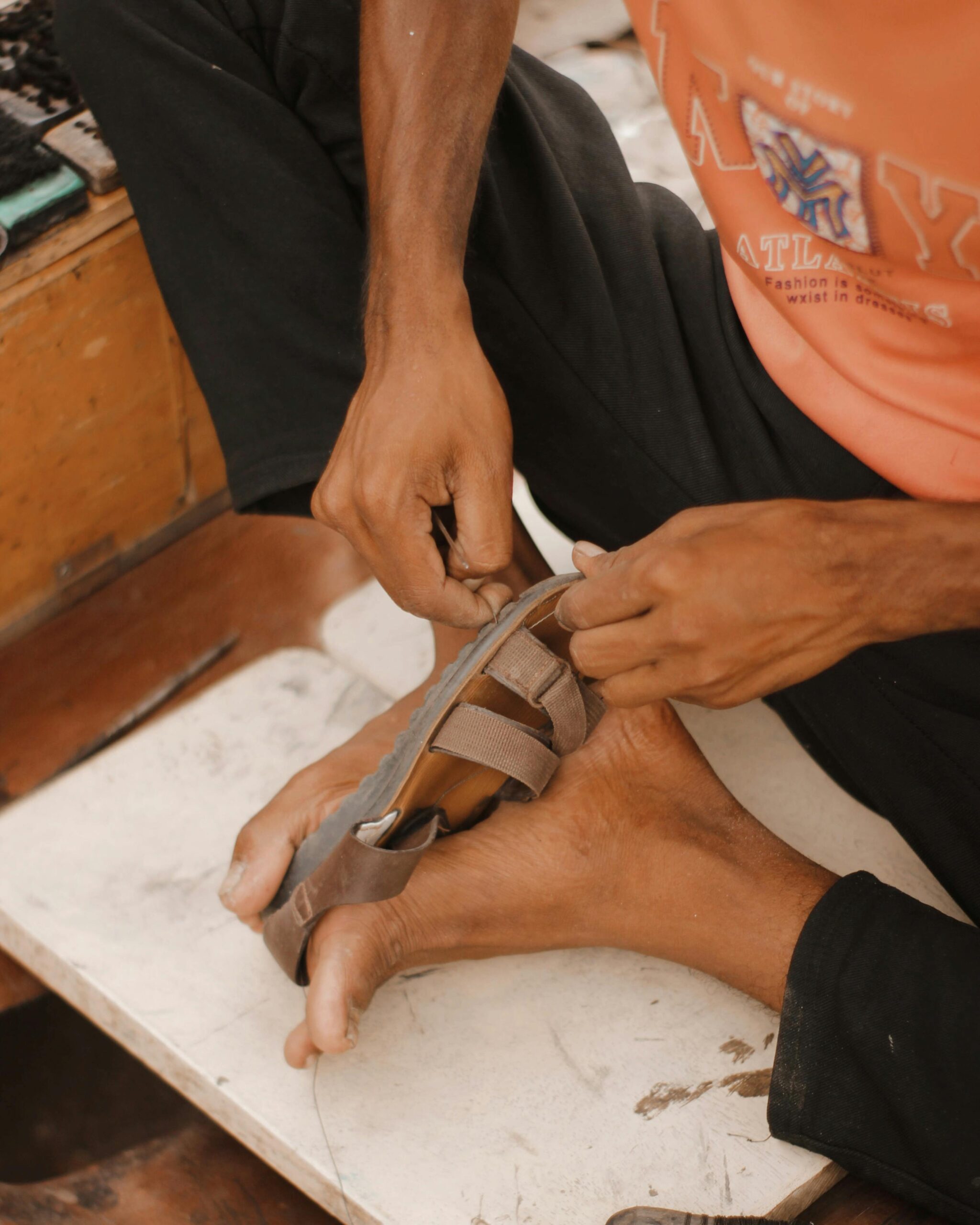
1. Check the stitching thread. Saddle stitch thread is thicker, waxed, and sits visibly proud on the surface. Machine lockstitch thread is thin, sunken, and perfectly uniform to the point of looking mechanical — because it is.
2. Examine the edges. Run your fingernail along the cut edge. Burnished edges are smooth, slightly rounded, and firm. Raw or painted edges feel rough, have visible layers, or show paint that has already started to chip.
3. Look for slight imperfections. Genuinely handcrafted pieces have micro-variations — stitch spacing that is consistent but not robotic, edges that are even but not machine-perfect. These are signs of a human hand, not flaws.
4. Smell the leather. Vegetable-tanned, naturally finished leather has a rich, earthy, organic smell. Chrome-tanned or heavily processed machine-production leather often smells chemical or plastic-like. Our complete guide to vegetable-tanned leather explains exactly why this tanning method produces such a distinctive, superior material.
5. Ask who made it. Genuine handcraft brands know their makers. They can tell you where a piece was made, often by whom, and what process was used. If a brand can’t answer that question, the answer is a machine in a factory.
The Bulani Promise: We can tell you exactly who made your Bulani piece, where, and how. That transparency is part of what we make.
7. Why Slow Craft Matters Beyond the Product
The argument for handcrafted leather is not only a quality argument. It is an argument about what kind of world we build when we choose where to put our money and attention.
Mass production of leather goods is resource-intensive, often environmentally damaging, and systematically undervalues the people involved in making things. Fast fashion in leather — cheap wallets, disposable bags, trend-driven accessories — creates enormous waste and perpetuates a system where nothing is meant to last.
Slow craft is a counter to that. When you buy a handcrafted leather piece, you are directly supporting a skilled artisan’s livelihood, reducing demand for disposable production, and choosing a model of ownership that values longevity over convenience. Research from the WRAP organisation shows that extending a garment’s active life by just nine months reduces its carbon, water, and waste footprint by up to 30%. The piece you buy will outlast a hundred machine-made alternatives. The carbon cost of making it once is incomparably lower than the cost of making it ten times.
Beyond the environmental and economic case, there is something harder to quantify but deeply felt: the satisfaction of owning something made by a person who cared about making it well. That quality of attention is embedded in the object. It does not wash out. It does not fade. It is, in fact, the thing that improves with age.
The Bulani Promise: Bulani exists because we believe in making things that matter. Slow, considered, built by hand — not because it’s easier, but because it’s right.
Frequently Asked Questions
Is handcrafted leather always more expensive than machine-made?
Upfront, yes — handcrafted leather typically costs more due to the time, skill, and material quality involved. But the cost-per-year comparison almost always favours handcrafted. A piece that lasts 20 years versus 2 years is dramatically cheaper in the long run, even if the initial price is four or five times higher.
Can you tell the difference between handcrafted and machine-made leather just by looking?
Yes, with practice — and often immediately on close inspection. The stitching, edge finishing, and surface quality are the key indicators. Saddle stitch is visually distinct from lockstitch. Burnished edges look and feel completely different from raw or painted ones. Once you know what to look for, machine-made goods become very easy to spot.
Does handcrafted leather require more care than machine-made?
Quality handcrafted leather — especially vegetable-tanned — benefits from occasional conditioning with a natural leather balm or beeswax. This is minimal effort: once every few months, or when the leather looks dry. Machine-made leather often can’t be effectively conditioned because it uses split leather or bonded material that doesn’t absorb products properly.
What is the best type of leather for handcrafted goods?
Vegetable-tanned full-grain leather is the gold standard for handcrafted goods. It is the densest, most durable, most responsive to hand techniques, and develops the richest patina over time. It is what Bulani uses. Chrome-tanned leather can also be worked by hand but does not age in the same way — it stays largely static rather than developing character.
How long does a truly handcrafted leather piece last?
With proper care, a high-quality handcrafted leather piece made from full-grain vegetable-tanned leather can last 20 to 50 years — and in some documented cases, well beyond that. Leather bags and belts from the early 20th century are still in daily use. The material itself does not degrade; it improves. What fails on lesser goods — stitching, edges, hardware — is done properly in handcrafted work and built to last.
Bulani pieces are made to be carried for life — not replaced by season. If you’re ready to invest in something that gets better every year you use it, explore the Bulani collection and discover what slow craft actually feels like in your hands.